Recent reports of a cybersecurity incident at Tata Electronics have attracted attention because the company is an important manufacturing partner to global technology brands, including Apple.
For enterprise security teams, the wider lesson is clear: once sensitive data moves into a supplier environment, the supplier becomes part of the organization’s effective security boundary.
Product designs, test results, production documents, source code, and credentials now move routinely between manufacturers, engineering partners, contractors, and service providers. The question is no longer whether data will leave the internal network, but whether the organization can still control and monitor it when it does.
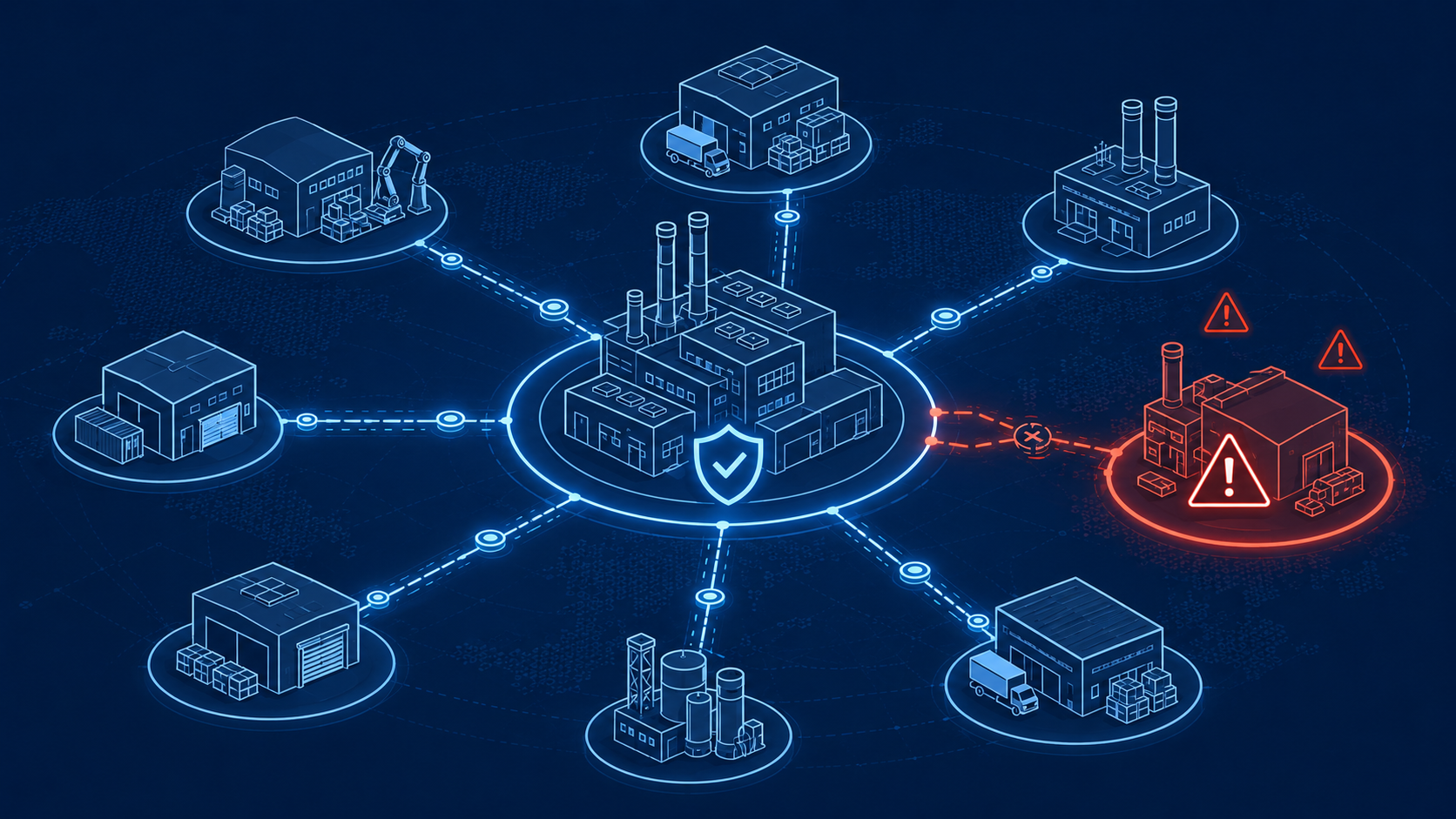
Why This Incident Matters
Tata Electronics confirmed in June 2026 that it had identified a cybersecurity incident affecting some of its systems. The extortion group World Leaks claimed to have obtained more than 204,000 files totaling over 630GB. Reported samples appeared to include manufacturing and supplier-related documents connected to several customers.
The exact attack path has not been publicly established. The more valuable question for security teams is how access and data movement are governed inside a strategically important supplier environment.
A partner may hold information from multiple customers, support several production stages, and connect to critical business systems. This concentration of access makes strategic suppliers attractive targets—and makes supplier security an enterprise risk rather than a procurement issue.
The Security Boundary Has Changed
Traditional security programs often treat the corporate network as the primary boundary and suppliers as external parties. Modern operations no longer fit that model.
A manufacturing partner may need access to specifications, bills of materials, test procedures, project portals, or remote support systems. These relationships are necessary, but they create a distributed security boundary built around four elements:
- Data: what the supplier can view, download, modify, or share.
- Identity: which users, contractors, service accounts, and systems can access it.
- Connectivity: how the supplier reaches enterprise applications and environments.
- Visibility: whether unusual access and data movement can be detected.
If any of these areas is unclear, the enterprise may have a blind spot around valuable information.
Five Controls Security Teams Should Review
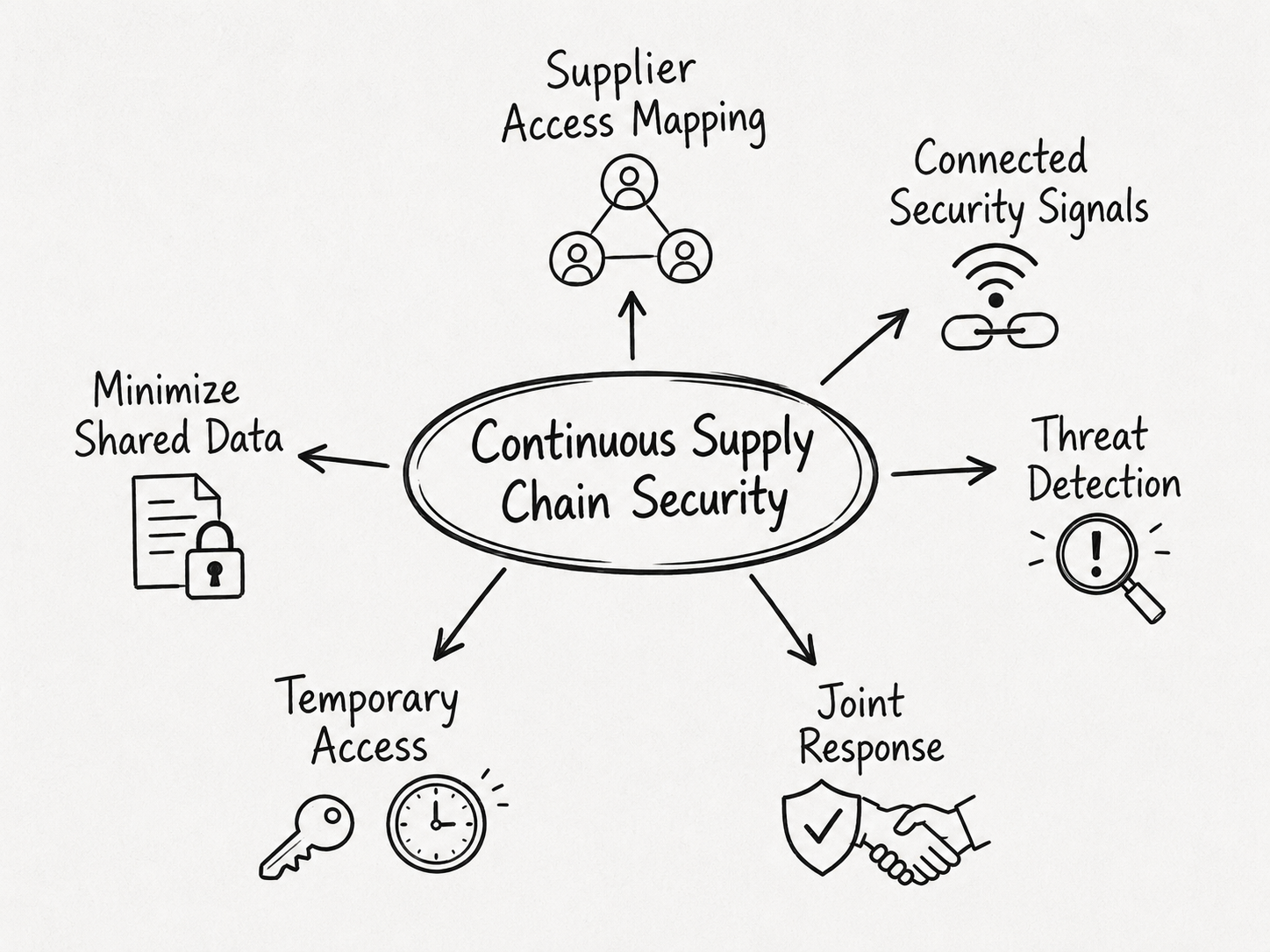
Map supplier access
Maintain a current view of which suppliers, users, service accounts, and interfaces can reach sensitive systems and datasets. Include subcontractors and machine-to-machine connections—not only the supplier company name.
Minimize shared data
Provide only the information required for a defined task. Separate data by project, mask unnecessary fields, restrict downloads, and apply traceability controls to sensitive files where appropriate.
Make access temporary
Third-party permissions should be purpose-specific and expire automatically. Privileged or remote sessions should require stronger authentication, trusted devices, time limits, and complete audit records.
Connect security signals
Identity, endpoint, file, network, cloud, and data-protection activity should be analyzed together. The useful alert is not simply “large upload detected,” but “a supplier account is collecting restricted project files outside its normal task and sending them to an unfamiliar destination.”
Prepare a joint response
Supplier agreements should define notification timelines, evidence retention, investigation responsibilities, escalation contacts, and containment options. Both parties should test the process before a real incident occurs.
Move Beyond Point-in-Time Assessments
Many supplier-security programs still depend on annual questionnaires, certifications, and contract reviews. These checks are useful, but they provide only a snapshot.
Supply-chain security must be continuous. Enterprises should be able to see when supplier access changes, when a dormant account becomes active, when sensitive files are read in unusual volumes, and when external connections deviate from normal patterns.
Supplier risk should be managed with the same operational discipline as internal risk.
The controls may be distributed across organizations, but visibility, accountability, and response must form one continuous process.
Conclusion
The Tata Electronics incident is a reminder that a company’s security posture depends partly on environments it does not own. Enterprises do not need to stop collaborating with suppliers; they need to make those relationships measurable and controllable.
Security responsibility must follow the data—wherever the data goes.